




Wisconsin v. Huff
Wisconsin Court of Appeals
319 Wis. 2d 258, 769 N.W.2d 154 (2009)
- Written by Caroline Milne, JD
Facts
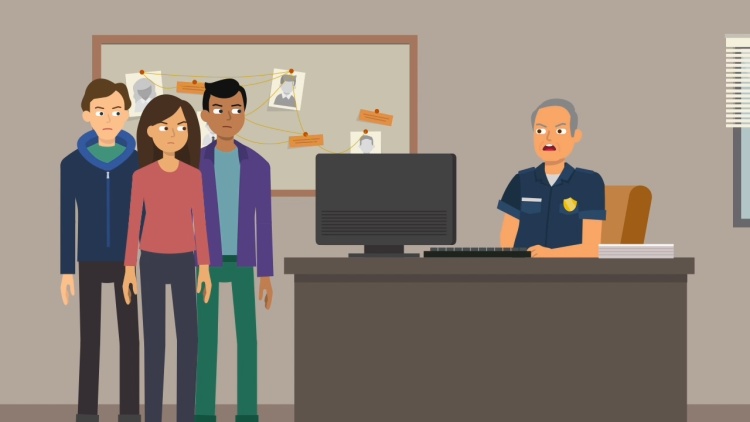
State election law in Wisconsin makes it illegal for any person to offer or give anything of value to induce a voter to go to the polls. During an election in Milwaukee, an election official noticed a flyer advertising an ongoing election party on behalf of the incumbent that offered free food and drinks to any early voter who showed a vote sticker at the door. Concerned that the flyer promoted a violation of the state election law, the election official notified the city attorney. An undercover operation was organized using undercover agents ineligible to vote in the district where the election took place. On two occasions, undercover agents attended the election party and met with Garrett Huff (defendant). Huff, who worked for the incumbent’s campaign, offered to escort two of the agents to city hall to vote. After the agents showed Huff a vote sticker, Huff gave the agents $5 each. Huff also gave a third agent $5 for bringing people to vote. Huff was subsequently charged with conspiracy to commit election bribery. Huff was convicted, and he appealed to the Wisconsin Court of Appeals. Huff argued that the conspiracy was a legal impossibility, because the coconspirators were undercover officers who could not lawfully vote in the election.
Rule of Law
Issue
Holding and Reasoning (Fine, J.)
What to do next…
Here's why 902,000 law students have relied on our case briefs:
- Written by law professors and practitioners, not other law students. 47,100 briefs, keyed to 994 casebooks. Top-notch customer support.
- The right amount of information, includes the facts, issues, rule of law, holding and reasoning, and any concurrences and dissents.
- Access in your classes, works on your mobile and tablet. Massive library of related video lessons and high quality multiple-choice questions.
- Easy to use, uniform format for every case brief. Written in plain English, not in legalese. Our briefs summarize and simplify; they don’t just repeat the court’s language.