




Schneckloth v. Bustamonte
United States Supreme Court
412 U.S. 218, 93 S. Ct. 2041, 36 L. Ed. 2D 854 (1973)
- Written by Angela Patrick, JD
Facts
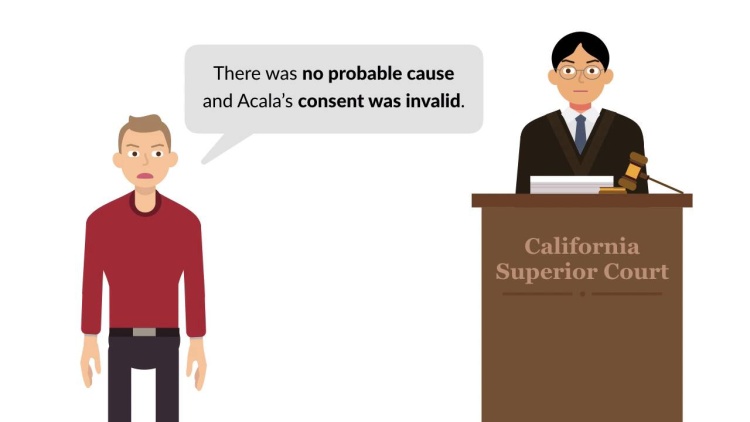
A police officer made a routine traffic stop for a burnt-out headlight and license plate. Although the officer had sufficient cause to stop the vehicle, he did not have probable cause to search the vehicle. However, at the officer’s request, an occupant, the brother of the car’s owner, consented to a search. Both the officer and the brother described their exchange as congenial. The officer had not threatened to arrest anyone or expressed suspicion of criminal activity. The officer discovered three stolen checks, which were later linked to passenger Robert Bustamonte (defendant). Bustamonte was charged with possessing checks with intent to defraud. He objected to the checks’ admission into evidence, claiming they were acquired via an unconstitutional search. The judge disagreed and admitted the checks. Bustamonte was convicted. The state appeals court affirmed, and the California Supreme Court denied review. Bustamonte then filed a writ of habeas corpus in federal district court to challenge the legality of his detention. The district court denied Bustamonte’s petition. The Ninth Circuit reversed, holding that consent to a search is invalid unless the person is aware that he can refuse consent. The United States Supreme Court granted certiorari.
Rule of Law
Issue
Holding and Reasoning (Stewart, J.)
Dissent (Douglas, J.)
Dissent (Marshall, J.)
Dissent (Brennan, J.)
What to do next…
Here's why 903,000 law students have relied on our case briefs:
- Written by law professors and practitioners, not other law students. 47,100 briefs, keyed to 995 casebooks. Top-notch customer support.
- The right amount of information, includes the facts, issues, rule of law, holding and reasoning, and any concurrences and dissents.
- Access in your classes, works on your mobile and tablet. Massive library of related video lessons and high quality multiple-choice questions.
- Easy to use, uniform format for every case brief. Written in plain English, not in legalese. Our briefs summarize and simplify; they don’t just repeat the court’s language.