




Craig v. Boren
United States Supreme Court
429 U.S. 190, 97 S. Ct. 451, 50 L. Ed. 2d 397 (1976)
- Written by Megan Petersen, JD
Facts
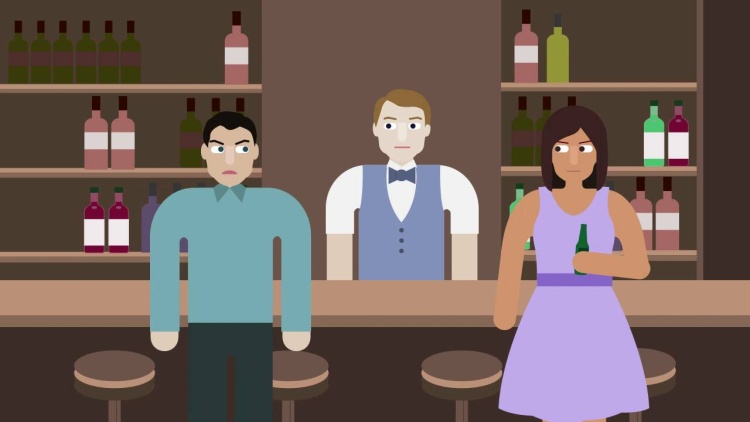
An Oklahoma statute prohibited the sale of “non-intoxicating” 3.2 percent alcoholic beer to males under 21 but permitted the sale of such beer to females over 18. Liquor vendors that made sales violating the statute faced sanctions and a loss of license. Curtis Craig (plaintiff), a male between 18 and 21, and Carolyn Whitener (plaintiff), an Oklahoma liquor vendor, sued Oklahoma governor David Boren (defendant) in federal court to challenge the statute’s constitutionality. Craig and Whitener argued that the statute’s gender-based distinction violated the Fourteenth Amendment’s Equal Protection Clause. Oklahoma argued that the distinction was intended to promote traffic safety. In support, the state presented statistical evidence that significantly more 18-to-20-year-old males were arrested for driving under the influence (DUI) than females in that age group. Specifically, of all females in that age group, only 0.18 percent were arrested for DUI, in comparison to 2 percent of males. The district court concluded that the state had presented sufficient justification for the statute’s differential treatment and therefore upheld the statute. Craig and Whitener appealed to the United States Supreme Court. While the appeal was pending, Craig turned 21, rendering the dispute moot as to him. The Supreme Court therefore addressed the threshold matter of whether Whitener had third-party standing to proceed with the constitutional challenge before turning to the substantive merits of the equal-protection claim.
Rule of Law
Issue
Holding and Reasoning (Brennan, J.)
Concurrence (Powell, J.)
What to do next…
Here's why 902,000 law students have relied on our case briefs:
- Written by law professors and practitioners, not other law students. 47,100 briefs, keyed to 994 casebooks. Top-notch customer support.
- The right amount of information, includes the facts, issues, rule of law, holding and reasoning, and any concurrences and dissents.
- Access in your classes, works on your mobile and tablet. Massive library of related video lessons and high quality multiple-choice questions.
- Easy to use, uniform format for every case brief. Written in plain English, not in legalese. Our briefs summarize and simplify; they don’t just repeat the court’s language.